
Cincinnati earned its hilly reputation honestly. Between the bluffs overlooking the Ohio River, the steep climb up to Mount Adams, and neighborhoods like Clifton and Mount Auburn perched well above downtown, the Queen City’s terrain is dramatically different from the flat grid layout found in many other Midwestern cities. That terrain makes for some genuinely beautiful views, but it also places a very specific and often underestimated strain on two systems in particular, your brakes and your automatic transmission.
Why Cincinnati’s Grades Are Tougher Than Typical City Driving
Steep, sustained grades like the climb out of downtown toward Mount Adams or the descent along Columbia Parkway ask more of a vehicle than routine flat driving ever does. On level ground, your brakes and transmission handle stopping, starting, and normal gear changes in a fairly predictable, low stress pattern. On a steep grade, particularly a long downhill stretch, both systems have to work continuously rather than intermittently, managing your vehicle’s speed against gravity for an extended period rather than during brief, isolated moments.
This continuous engagement generates significantly more heat than typical driving, and heat is one of the primary factors that accelerates wear in both braking components and transmission fluid. A single descent down a steep Cincinnati hill might not cause noticeable wear on its own, but repeated daily exposure, especially for commuters navigating routes like Columbia Parkway or the hills around Eden Park regularly, adds up considerably faster than driving the same total mileage on flat terrain would.
How Steep Grades Affect Your Brakes Specifically
Descending a steep hill requires continuous or repeated brake application to control speed, and this generates substantially more heat than the shorter, intermittent braking typical of flat road driving. Brake pads exposed to this kind of sustained heat wear down faster, and in more severe cases, repeated heat exposure can lead to rotor warping, which shows up as a pulsing sensation through the brake pedal or steering wheel during braking.
Drivers who commute through Cincinnati’s hillier neighborhoods regularly often need brake service more frequently than the standard maintenance interval would predict based on mileage alone, simply because the nature of their driving generates disproportionate wear relative to the distance actually covered.
Why Your Transmission Feels The Strain Too
Automatic transmissions are less commonly discussed in the context of hilly driving, but steep grades put real strain on them as well. Climbing a steep hill often causes an automatic transmission to downshift and hold a lower gear to provide adequate power, which increases engine RPM and generates more heat within the transmission than cruising at a steady gear on flat terrain would produce. Descending the other side, particularly if a driver uses the transmission for some engine braking, adds additional heat and mechanical stress on top of what the climb already generated.
Over time, this repeated heat cycling can accelerate the breakdown of transmission fluid, reducing its ability to lubricate and cool internal components effectively. A transmission that has spent years regularly climbing and descending Cincinnati’s steeper streets may show signs of wear, like rougher shifting or delayed engagement, sooner than the same transmission would in a vehicle driven primarily on flat terrain, even with comparable overall mileage.
Signs Worth Paying Attention To
A few signs suggest Cincinnati’s hills may be catching up with your brakes or transmission. A squealing noise from a wear indicator, a burning smell after a long descent, or a brake pedal that feels less responsive than usual are all worth having checked promptly. On the transmission side, rough or delayed shifting, a noticeable clunk when the transmission engages, or a burning smell that seems distinct from typical brake odor can indicate transmission fluid that has broken down from repeated heat exposure.
If your vehicle has ever struggled to start after a long day of navigating Cincinnati’s hills, our guide on the top 10 reasons your car won’t start and how to get back on the road covers a range of causes worth ruling out alongside any brake or transmission concerns you may be noticing.
Driving Habits That Reduce Strain On Steep Grades
Using a lower gear during a long descent, whether through a manual shift mode or simply allowing an automatic transmission to hold a lower gear rather than coasting in drive, helps distribute the workload between engine braking and your brake pads rather than relying entirely on the brakes to manage speed. This technique reduces the continuous heat buildup in both systems and can meaningfully extend the life of brake components in particular.
Avoiding excessive following distance changes and sudden braking on steep sections, opting instead for earlier, more gradual braking, also helps manage heat buildup more effectively than last minute hard stops.
Why Cincinnati Drivers Should Check These Systems More Often
Standard maintenance intervals are generally built around average driving conditions, which do not fully account for the extra strain that sustained hill climbing and descending add. Drivers who regularly navigate Cincinnati’s steeper neighborhoods should consider having brakes and transmission fluid checked more frequently than the standard schedule suggests, particularly if their daily commute includes routes like Columbia Parkway, the hills around Mount Adams, or similar grade heavy stretches.
This is especially worth considering for anyone who recently moved to Cincinnati from a flatter city and is not used to thinking about hills as a maintenance factor at all. A vehicle that performed reliably for years in a flat suburban commute elsewhere can start showing brake and transmission symptoms noticeably sooner once it takes on a regular diet of Cincinnati’s steeper streets, simply because the driving pattern itself has changed even if the total mileage looks similar on paper.
Why A Mobile Mechanic Fits Cincinnati’s Terrain Well
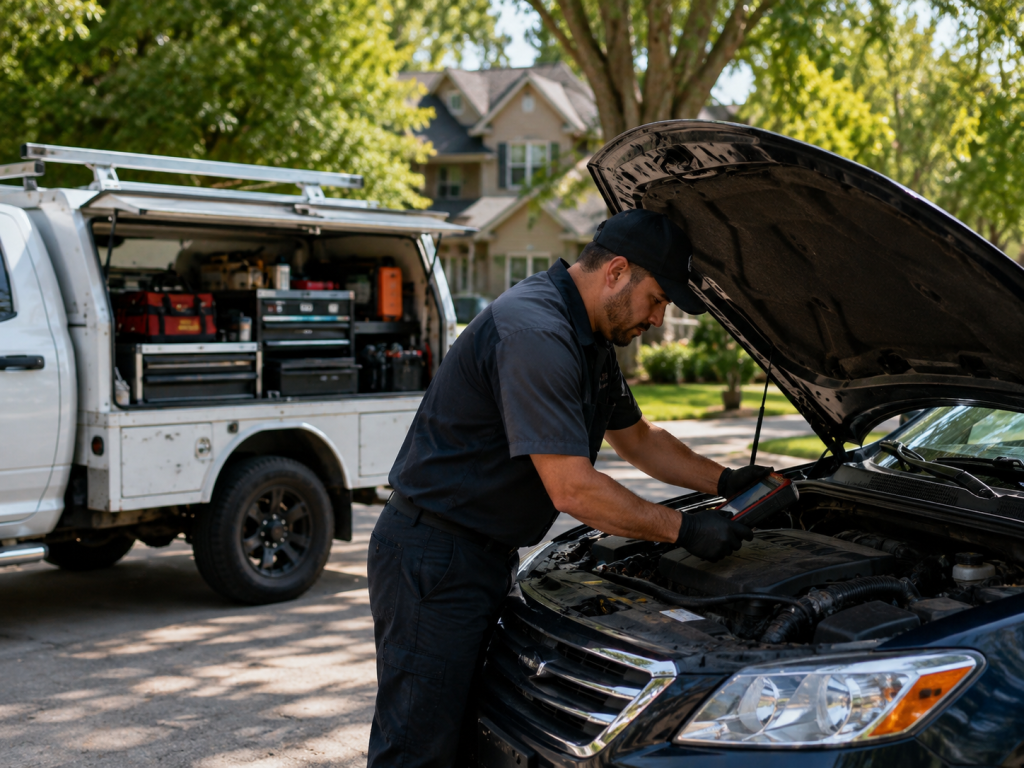
Given how much extra strain Cincinnati’s hills place on brakes and transmissions, having a technician familiar with these specific driving conditions come directly to your home or workplace offers a real advantage. A mobile mechanic can inspect brake pads, rotors, and transmission fluid condition right where your vehicle is parked, catching wear that hilly commuting accelerates before it becomes a more serious and expensive repair.
We covered the broader benefits of this approach in our article on why mobile mechanics are better than traditional auto shops in Cincinnati, which explains how convenience and local familiarity come together, particularly useful for the kind of ongoing maintenance that hilly terrain like ours tends to require.
Stay Ahead Of What Cincinnati’s Hills Are Doing To Your Car
The Queen City’s dramatic terrain is part of what makes it such a distinctive place to live, but it also means brake and transmission wear happens faster here than it would in a flatter city with otherwise similar traffic patterns. Paying attention to early warning signs, adjusting driving habits on steep grades, and having these systems checked more often than the standard schedule suggests are all simple ways to stay ahead of the extra demands Cincinnati’s hills place on your vehicle.
If it has been a while since your brakes or transmission fluid were checked, visit our homepage to learn more about our services, or reach out through our contact us page to schedule a visit at your home or office anywhere in the Cincinnati area.
A little extra attention now can help your brakes and transmission keep up with everything Cincinnati’s hills ask of them every single day.