
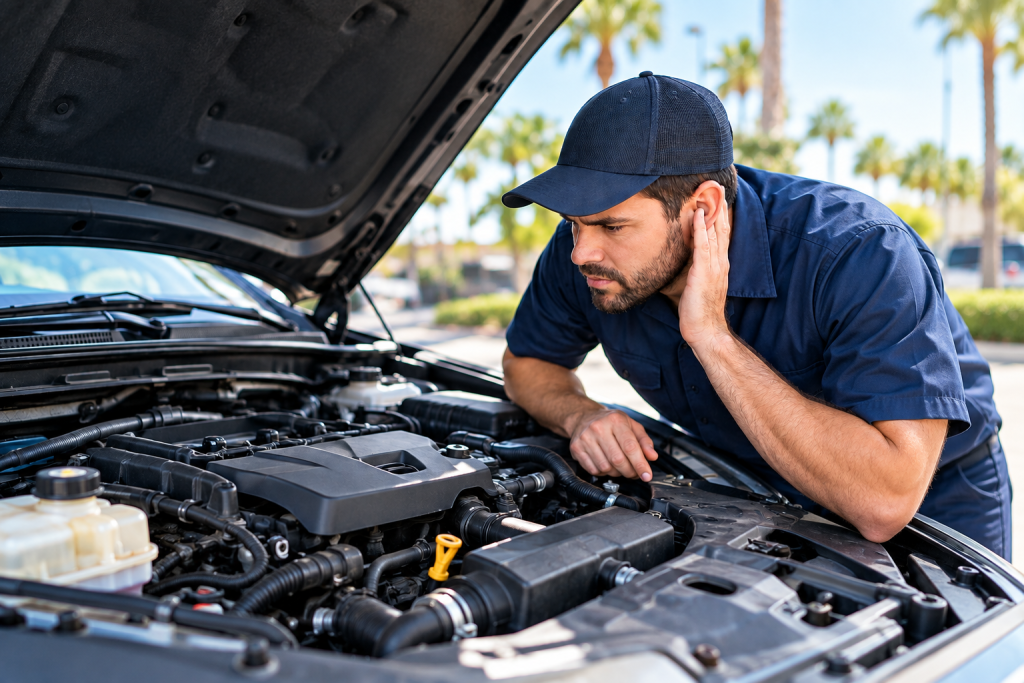
The moment a light appears on your dashboard, it is easy to feel a jolt of worry. Is it serious? Can you keep driving? Should you pull over right now? Dashboard lights are your car’s way of telling you something needs attention, and learning the basics can save you from both needless panic and costly mistakes. This quick guide explains what dashboard warning lights mean in plain language, which ones need immediate action, and how mobile diagnostics in Cincinnati can help you find the real cause.
Start With the Color
Most cars use a simple color system, much like a traffic light. Colors are a good first clue, though your owner’s manual is always the final word for your specific vehicle.
- Red usually means a serious problem or a safety issue that needs attention right away
- Yellow or amber usually means something needs service soon, but you can often keep driving carefully
- Green or blue usually means a system is on and working, such as headlights or cruise control
A red light is a reason to stop safely as soon as you can. A yellow light is a reason to schedule a check. A green light is simply information.
Check Engine Light
This is the light drivers see most often. It looks like an engine outline, and it means the engine computer has detected a problem with the engine, the emissions system, or related sensors. The cause can be minor, like a loose gas cap, or more involved, like a failing oxygen sensor, worn spark plugs, or a catalytic converter issue.
How the light behaves matters a great deal. A steady light means you should have the car checked soon. A flashing light usually signals an active engine misfire, which can overheat and damage the catalytic converter if you keep driving hard. If it flashes, reduce speed and load and get the car looked at as soon as possible. A technician reads the stored trouble code with a scan tool, which points toward the cause so nothing is replaced by guesswork.
Oil Pressure Warning Light
This red light, often shaped like an old fashioned oil can, means the engine is not getting proper oil pressure. It can be caused by low oil, a failing oil pump, or a leak. Running an engine without proper oil pressure can destroy it in a very short time. If this light comes on, pull over safely and turn off the engine. Check the oil level once the engine has cooled, and do not keep driving if the light stays on. Call for help instead.
Engine Temperature Warning Light
A thermometer symbol, often red, means the engine is running too hot. Common causes include low coolant, a leak, a failed thermostat, a bad water pump, or a broken cooling fan. Overheating can warp parts and cause expensive damage. Pull over, turn off the engine, and let it cool before looking under the hood. Never open a hot radiator cap, because the system is under pressure and can release scalding fluid. Our article on what Cincinnati’s hills mean for your brakes and transmission explains why steep terrain puts extra load on the parts that generate heat.
Battery or Charging System Light
The battery symbol usually means the charging system is not working properly. The cause may be a failing alternator, a loose or broken belt, or a bad connection, and sometimes the battery itself. The car is running on battery power alone when this light is on, so it will eventually stop. Turn off unneeded accessories and head to a safe place or call for help. If your car will not start at all, our guide to the top 10 reasons your car won’t start and how to get back on the road covers the usual causes.
Brake System Warning Light
A red light showing the word brake or a circle with an exclamation mark can mean low brake fluid, a problem in the hydraulic system, or that the parking brake is still on. First check that the parking brake is released. If the light stays on, or if the pedal feels soft or sinks, stop driving and have the system inspected. Your brakes are your most important safety system, and a failure can be sudden.
ABS Warning Light
The letters ABS in a circle indicate a problem with the anti lock braking system. Your normal brakes usually still work, but the anti lock feature that helps prevent skidding during hard stops may be disabled. That matters on wet or icy roads. Have the system inspected soon, since the cause can be as simple as a faulty wheel speed sensor.
Tire Pressure Warning Light
This yellow light looks like a cross section of a tire with an exclamation mark. It tells you that one or more tires are low on air. Cold weather often triggers it, since air pressure falls as the temperature drops. Check all four tires with a gauge and inflate them to the number on the door jamb sticker. If the light returns, you may have a slow leak or a faulty sensor. A flashing light that turns solid can indicate a sensor system fault.
Traction Control and Stability Control Lights
A car with squiggly lines behind it usually means the traction or stability control system is working, if it flashes briefly, or that it has a fault, if it stays on. Flashing during slippery conditions is normal. A steady light means the system may not be helping you, and a technician should take a look.
Airbag Warning Light
A seated figure with a circle in front of it points to a problem with the airbag or seat belt restraint system. The airbags may not deploy in a crash if the light is on. Do not ignore it, and have it checked promptly.
Power Steering and Other Lights
A steering wheel with an exclamation mark can indicate a power steering problem, which makes the wheel harder to turn. Other lights you may see include low fuel, door ajar, washer fluid, and maintenance reminders. Those are usually simple, but a maintenance reminder does not replace a proper inspection.
What to Do When a Light Comes On
- Stay calm and note the color and symbol
- If it is red, find a safe place to stop and turn off the engine
- If it is yellow, plan to have the car checked soon
- Check your owner’s manual for the exact meaning
- Note any changes in sound, smell, or handling
- Do not disconnect the battery or clear codes just to turn the light off, since that erases useful information
Why a Scan Tool Matters
A light tells you that something is wrong, but not what. Modern cars store trouble codes that identify which system or sensor reported a problem. A technician with a proper scan tool can read those codes, check live data, and test the related parts to find the true cause. A code does not always point to the part that needs replacing, so testing is important. Paying for a diagnosis is often cheaper than replacing parts that were not the problem.
Can a Mobile Mechanic Diagnose Dashboard Lights?
Yes. Mobile diagnostics let a technician come to your home or workplace, read the codes, inspect the related parts, and explain what they find. In many cases the repair can be completed right there. Some problems may need a shop, and a trustworthy technician will tell you honestly when that applies. When you book, tell them which light came on, whether it is steady or flashing, and any symptoms you noticed.
Do Not Ignore the Warning
A small problem found early is almost always cheaper than a large one found late. If a light appears, take it seriously, handle it based on its color, and get it checked.
To learn more about our services, visit our homepage. If a warning light has come on, reach out through our contact us page and we will come to you anywhere in the Cincinnati area.